Website personalization has been a B2B marketing staple for over 15 years. Swap a headline for a target account. Show a different hero image by industry. Change a CTA based on company size. The promise has always been the same: personalize the website, improve conversion rates, grow pipeline.
But after a decade and a half, the results tell a different story. Most B2B marketing teams still struggle to connect website personalization to meaningful pipeline impact. The reason isn't execution. It's the strategy itself.
The Website Is One Touchpoint. The Buyer Journey Has Dozens.
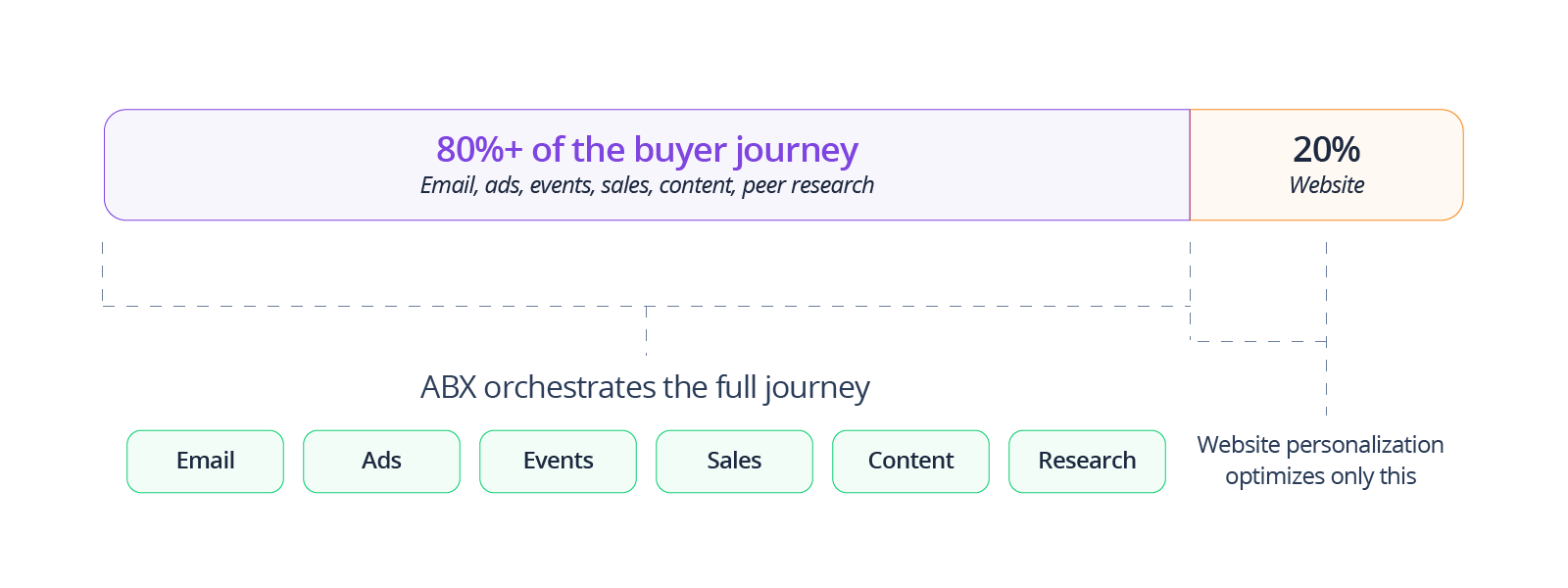
Research consistently shows that B2B buyers spend less than 20% of their purchase journey on a vendor's website. The remaining 80%+ happens across email campaigns, ad interactions, events, sales conversations, content consumption, peer recommendations, and independent research.
Website personalization tools optimize for that small slice. They make the website experience better for the people who happen to arrive there. But they do nothing to reach buyers before they visit, nurture them after they leave, or connect their activity across channels into a coherent picture.
This is the fundamental gap. Improving website conversion rates is a valuable tactic. But it is not a strategy for generating and accelerating pipeline.
What ABX Actually Requires
Account-Based Experience (ABX) is a fundamentally different approach. Instead of waiting for accounts to find your website and optimizing what they see when they arrive, ABX surrounds target accounts with relevant, personalized engagement across every touchpoint in their buying journey.
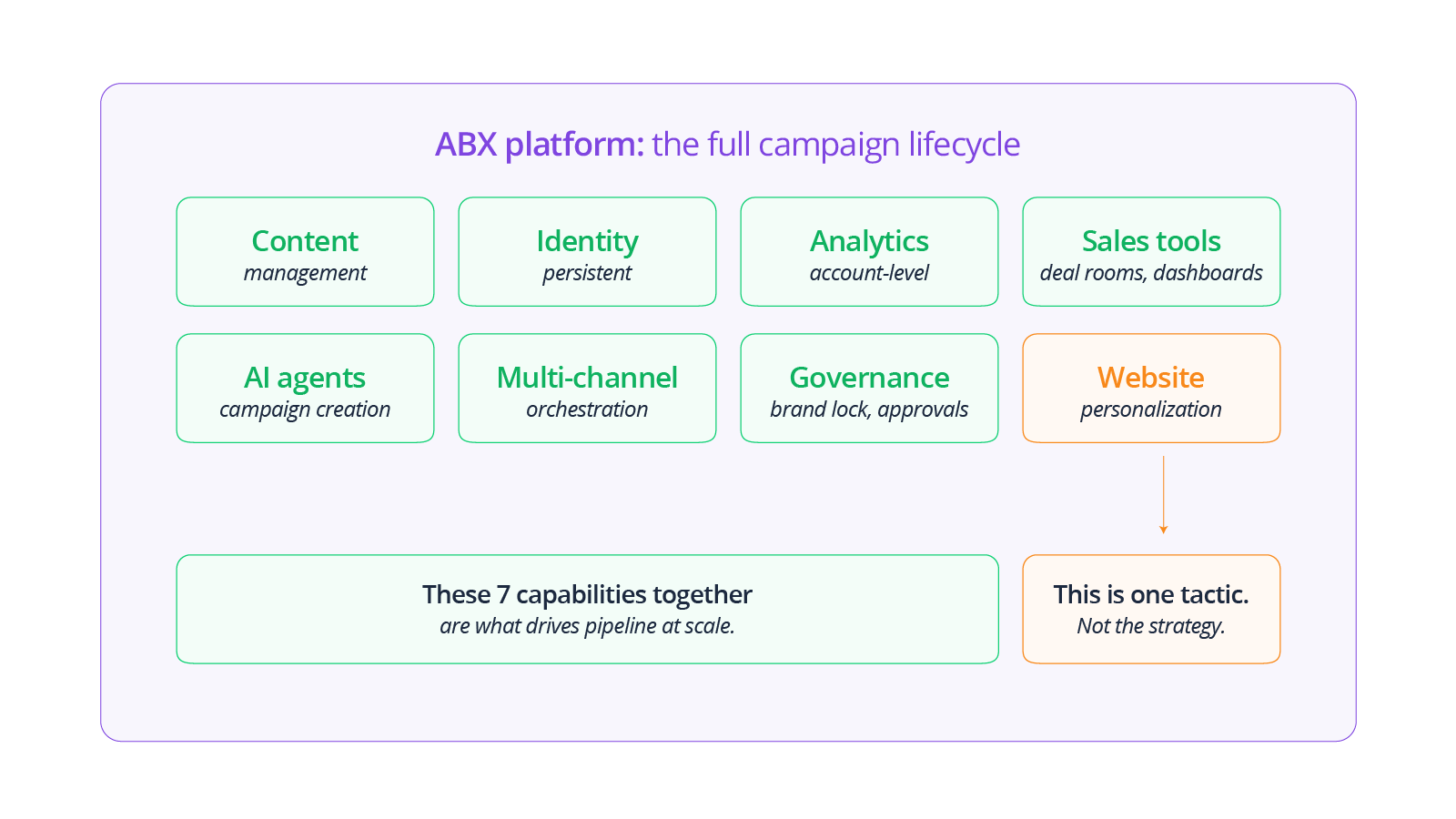
An effective ABX strategy requires several things working together: the ability to target accounts across inbound and outbound channels, personalized content and messaging tailored to industry, buying stage, and persona, sales alignment so reps know what accounts are engaging with and when, rich analytics that track engagement depth (not just page visits) at the person and account level, and multi-touchpoint orchestration that connects the dots across web, email, ads, events, and sales outreach.
No single touchpoint moves the needle on its own. It's the combination that builds momentum, creates buying confidence, and drives accounts through the pipeline.
The Scale Problem With 1:1 Pages
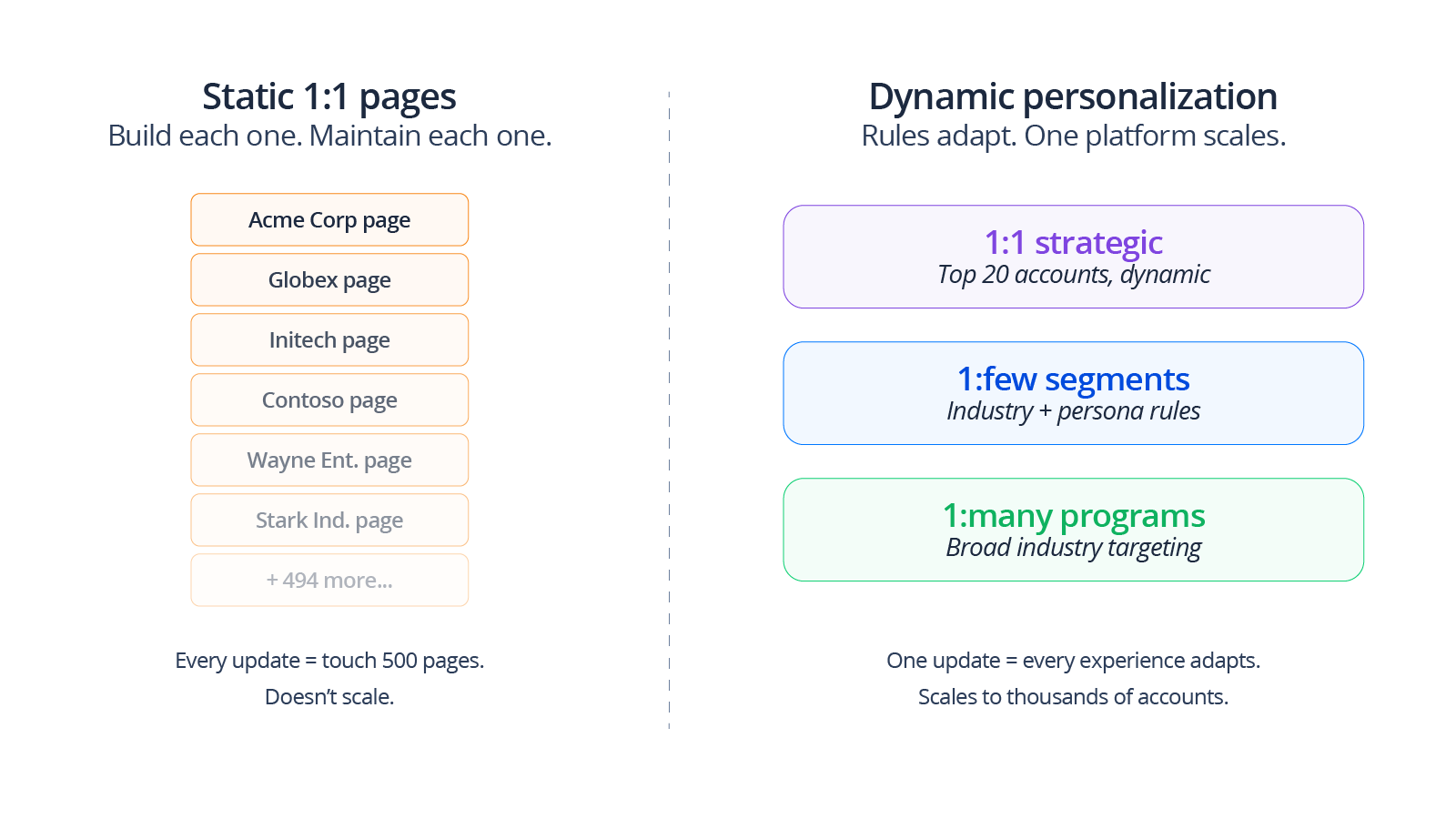
Many personalization tools lean into a "1:1 microsite" model. Build a custom page for each target account. Send a link. Measure conversions.
This works when you're targeting 10 to 15 accounts. But pipeline math doesn't work at that scale. To drive meaningful pipeline, most B2B organizations need to engage hundreds or thousands of accounts across multiple segments and buying stages.
Creating and maintaining individual pages for each account becomes operationally unsustainable. Every update, every new product message, every campaign refresh requires touching each page individually. The approach that felt agile at small scale becomes a bottleneck at the scale pipeline actually demands.
Effective ABX needs a tiered approach: true 1:1 experiences for your most strategic accounts, dynamically personalized 1:few campaigns for priority segments, and scalable 1:many programs for broader industry and use case targeting. All of this, managed from a single platform with consistent brand governance and unified analytics. For a side-by-side look at how this plays out against website personalization tools, see our Folloze vs Mutiny comparison.
Recent roundups of modern GTM tools highlight the shift toward multi-channel orchestration and account intelligence, not just website optimization.
Shallow Signals Don't Drive Pipeline Decisions
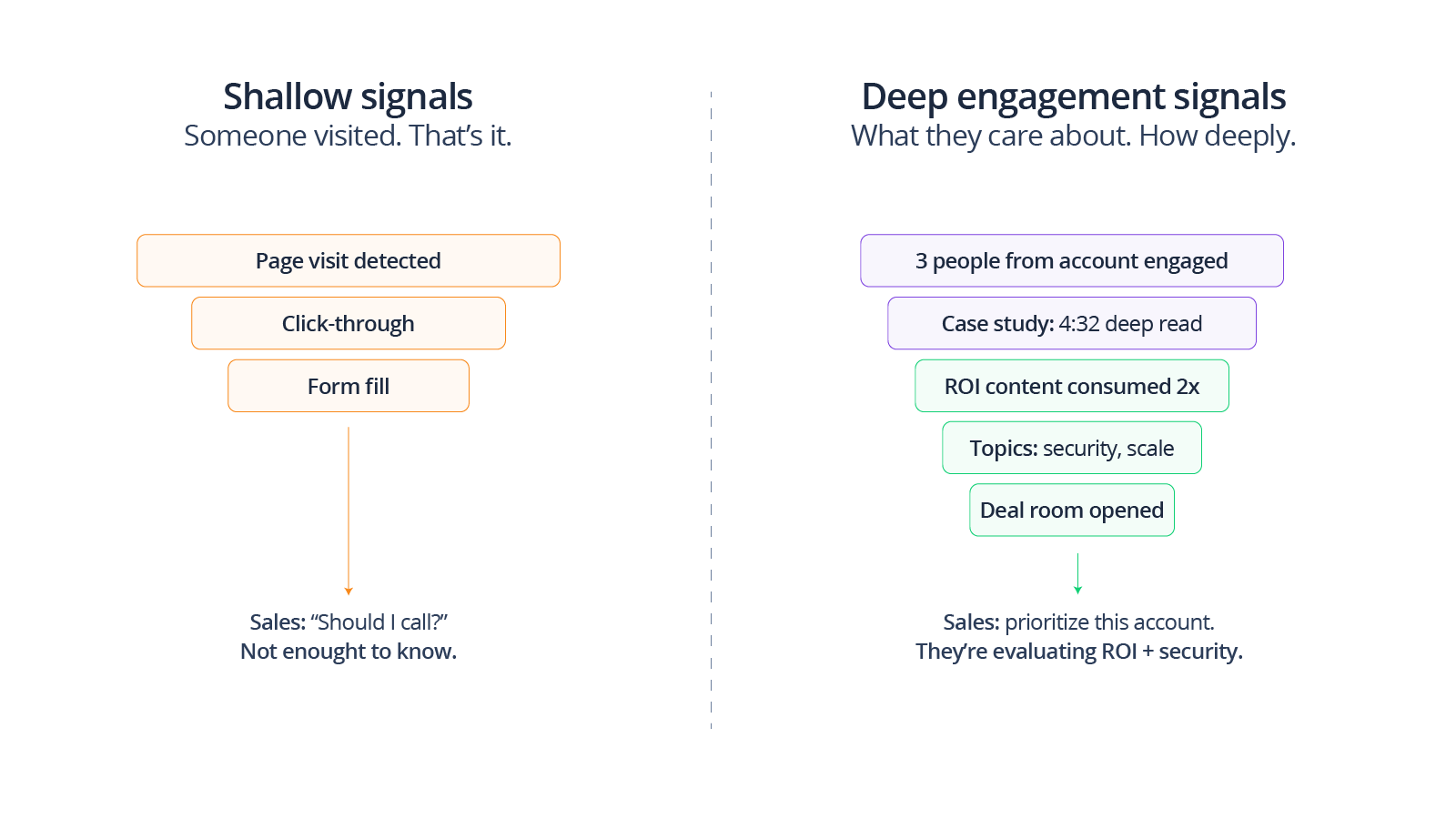
Website personalization tools typically measure page visits, click-through rates, and form submissions. These are useful metrics for optimizing web experience, but they don't tell GTM teams what they actually need to know: which accounts are deeply engaged, what content they're consuming, which topics resonate, and where they are in their buying journey.
Pipeline acceleration depends on engagement depth, not surface activity. Knowing that someone from a target account visited a personalized landing page is a weak signal. Knowing that three people from the same account spent significant time consuming specific content assets across multiple touchpoints, then engaged with a sales deal room, is a strong signal. That's the difference between web analytics and account intelligence.
This level of insight requires a persistent identity model that tracks known and unknown users across channels, connects anonymous and identified activity, and aggregates engagement into an account-level score that sales teams can actually act on. Cookie-dependent, session-based tracking can't deliver this.
This is one of the clearest gaps between website personalization tools and full ABX platforms, and we break it down in detail here.
Content Is the Fuel. You Need an Engine.
The most overlooked gap in website-only personalization is content management. B2B buyers self-educate through content: case studies, whitepapers, product guides, videos, analyst reports. The content they consume (and how deeply they engage with it) is one of the strongest indicators of buying intent.
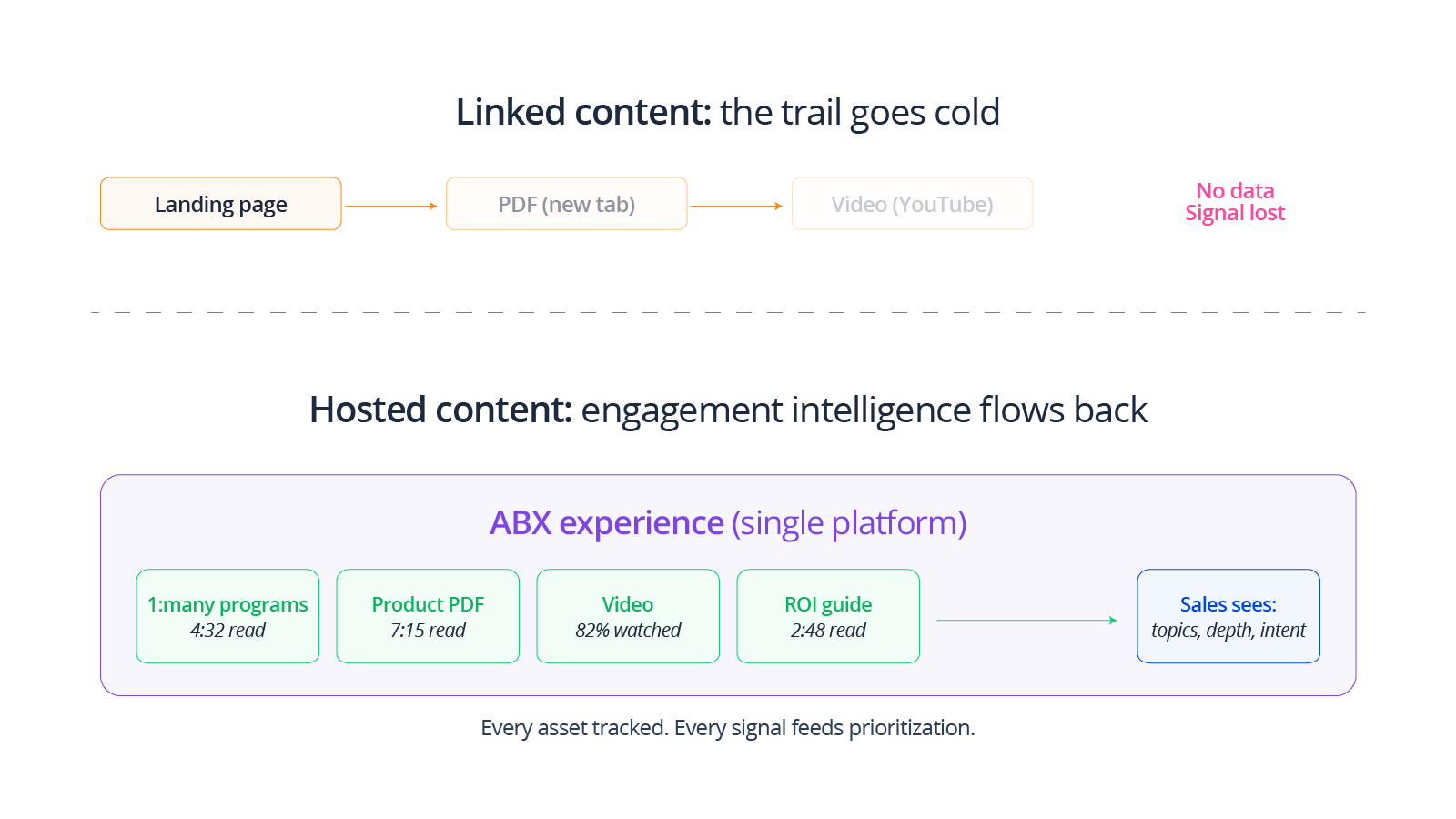
Website personalization tools typically link out to content hosted elsewhere. The PDF opens in a new tab. The video plays on YouTube or Wistia. The blog post lives on WordPress. Every time a buyer leaves the personalized experience to consume content, you lose visibility into their engagement. You can't measure time spent, you can't track which assets they consumed in what order, and you can't use that data to personalize what they see next.
An ABX platform hosts, renders, and tracks content directly within the experience. It measures engagement at the asset level. It uses that data to recommend the next best piece of content based on persona, industry, and buying stage. Content becomes an intelligence layer, not just a link in an email.
Many of the leading account-based marketing platforms now emphasize unified engagement data and cross-channel execution.
The Real Question for Marketing Leaders
The question isn't "should we personalize your website?" Of course you should. The question is whether website personalization alone is a sufficient strategy for generating and accelerating the pipeline your business needs.
For most B2B organizations targeting mid-market and enterprise accounts, the answer is no. Website personalization is a tactic that belongs inside a broader ABX strategy, not a strategy in itself.
The shift from website personalization to full ABX isn't about adding more tools. It's about consolidating around a platform that supports the entire buyer journey: creating experiences, managing content, personalizing across channels, engaging sales teams, and measuring what actually matters for pipeline and revenue.
That's not a nice-to-have. For teams trying to engage hundreds or thousands of accounts with precision and prove impact to the business, it's the only approach that scales.
---
Frequently Asked Questions
What is the difference between website personalization and ABX?
Website personalization modifies on-site elements like headlines, images, and CTAs for different visitor segments. It optimizes a single touchpoint. Account-Based Experience (ABX) orchestrates personalized engagement across the entire buyer journey, including outbound campaigns, events, content experiences, sales deal rooms, and the website. ABX includes content management, persistent identity across channels, deep engagement analytics, AI campaign orchestration, and sales alignment. Website personalization is one tactic within a broader ABX strategy.
For a concrete example, see our comparison of Folloze and Mutiny.
Why doesn't website personalization drive pipeline on its own?
B2B buyers spend less than 20% of their purchase journey on a vendor's website. Website personalization optimizes only that small slice. It cannot reach buyers before they visit, nurture them after they leave, or connect their behavior across email, ads, events, and sales interactions. Pipeline generation requires multi-channel orchestration, content intelligence, and account-level engagement signals that website-only tools cannot provide.
Can 1:1 personalized landing pages scale for ABM?
Static 1:1 landing pages work for a small number of accounts but become operationally unsustainable at scale. Most B2B organizations need to engage hundreds or thousands of accounts across segments and buying stages. Maintaining individual pages for each account means every product update, campaign refresh, or messaging change requires touching each page separately. Effective ABM needs a tiered approach: dynamic 1:1 experiences for strategic accounts, 1:few campaigns for priority segments, and scalable 1:many programs for broader targeting.
What capabilities does an ABX platform need that website personalization tools lack?
An ABX platform requires a full content management system with inline rendering and content-level analytics, a persistent identity model that tracks known and unknown users across channels, multi-channel campaign orchestration, AI-powered campaign creation and content recommendations, sales engagement tools including account dashboards and deal rooms, and enterprise governance features like brand lock, approvals, and unified taxonomy.
What is the difference between an ABM platform and a landing page builder?
A landing page builder creates individual pages, sometimes using AI to generate variations from templates or CSV data. An ABM platform orchestrates entire campaigns across the buyer journey. Landing page builders produce one asset type for one touchpoint. ABM platforms manage content, personalization, analytics, identity, and sales alignment across every channel where buyers engage. Pages are one deliverable within a campaign, not the campaign itself.
Why does content management matter for ABM?
B2B buyers self-educate through content like case studies, whitepapers, videos, and product guides. How deeply they engage with content is one of the strongest indicators of buying intent. Website personalization tools typically link to content hosted elsewhere, so marketers lose engagement visibility once a buyer clicks through. An ABX platform hosts, renders, and tracks content within the experience, measuring time spent, consumption sequence, and using that data to recommend the next best asset.
What is persistent identity and why does it matter for ABM?
Persistent identity is an identity resolution model that tracks both known and anonymous users across channels, connecting their activity into a unified account-level profile. Unlike cookie-dependent tracking, persistent identity aggregates engagement from web visits, email interactions, content consumption, event attendance, and sales touchpoints. This produces account-level engagement scores that sales teams can use for prioritization, and enables consistent personalization throughout the buyer journey.
Is website personalization still worth doing?
Yes. Personalizing the website for target accounts is a valuable tactic. But it belongs inside a broader ABX strategy, not as a standalone approach. For B2B organizations targeting mid-market and enterprise accounts, website personalization alone typically cannot generate and accelerate pipeline at the scale the business requires. The shift to ABX means consolidating around a platform that supports the entire buyer journey.