
Meet Folloze X: Marketing, Reimagined for How Work Actually Gets Done
Folloze X is a new way Folloze is approaching go-to-market execution, not as a single tool, but as a coordinated team of specialized AI agents working together. In this post, we’re focused on the Campaign Agent, the one responsible for turning an idea into a real, usable campaign.
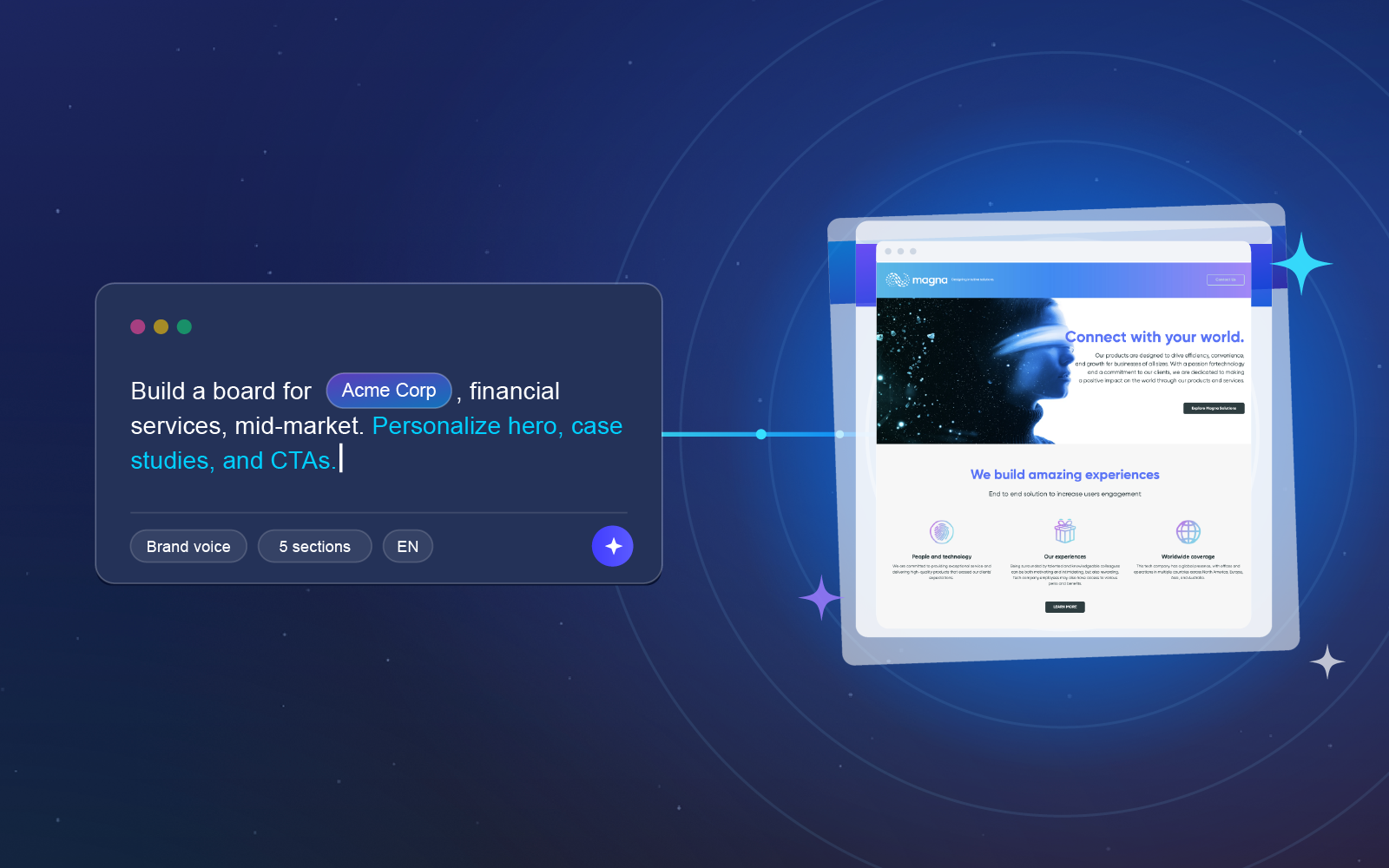
The Campaign Agent is an AI-powered campaign creation tool designed to help B2B marketers build full campaigns in minutes. Instead of starting from a blank page, marketers describe the product, target audience, goals, and constraints in plain language.
Using this rich context, the Campaign Agent generates a complete campaign foundation across landing pages, emails, and ads through a simple, conversational workflow. Marketers then review, refine, and control what goes live.
The result isn’t hands-off automation. It’s a faster, higher-quality way to create campaigns without sacrificing accuracy, judgment, or control. The Campaign Agent is currently in beta with a small group of customers.
Faster starts. Fewer rebuilds. Full control.
To introduce Folloze X, we didn’t start with a polished demo. We started with a test.
A conversation between Melinda Monaco and Kristi Tutt, grounded in real testing, not a polished demo
When Melinda Monaco, VP of Marketing at Folloze, sat down with Kristi Tutt, ABM Manager at Folloze, the goal wasn’t to walk through features. It was to reflect on what actually happens when real B2B marketers try to use the Campaign Agent the way they would in their day-to-day work.

We ran two testing sessions on purpose. One with customer-facing teams: customer success, onboarding, and sales, represented by Candace (Taylor) DeAngelis, Cassie Ricci, and Meghan Richardson. And one with design-focused teams: the practitioners who build Folloze boards for our own marketing and for customers, Chris Myles, Flor Estrada, and Milla Alves.
They don’t work the same way.
They don’t need the same things.
And that’s exactly why this mattered.
Any system meant to scale marketing has to hold up under all three realities.
The Campaign Agent wasn’t just tested across scenarios, it was tested across real practitioner mindsets.
The point wasn’t to make it look perfect.
The point was to see how it behaves when marketers push it, question it, and try to break it.
Everyone Starts Campaigns Differently and That’s the Point
Melinda Monaco:
When we planned the testing sessions, we intentionally gave everyone different scenarios and input styles. Why was that important?
Kristi Tutt:
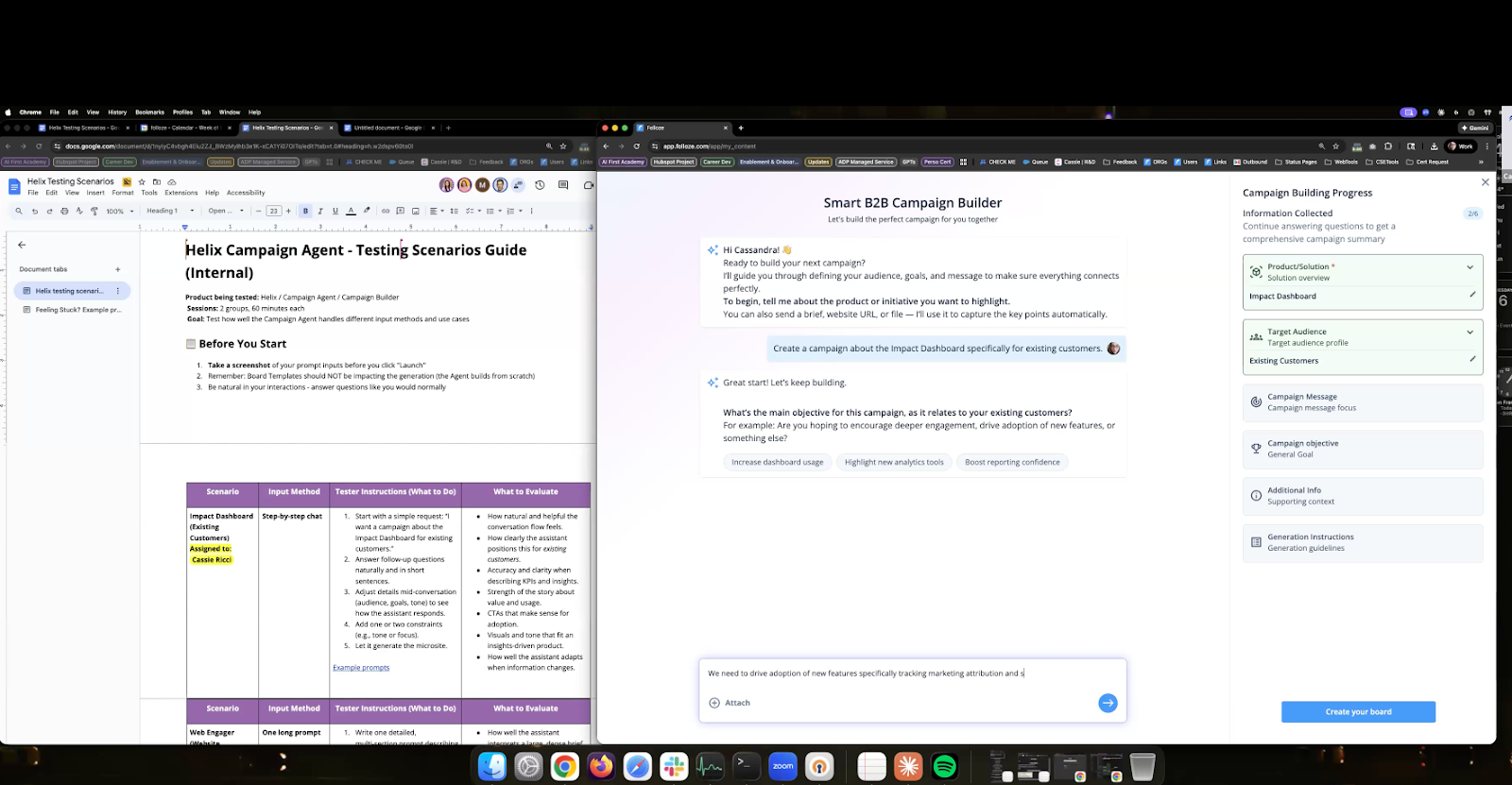
Because that’s how marketing actually works. Meghan started with very direct, step-by-step inputs. Candace came in with a long, detailed brief all at once. Cassie adjusted things mid-conversation and questioned the outputs.
What stood out wasn’t just that the Campaign Agent handled all of it, it was that nobody had to change how they naturally think or work.
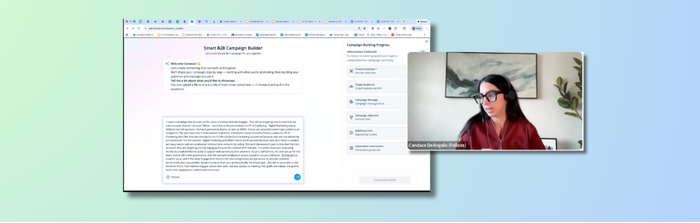
Candace (Taylor) DeAngelis (during testing):
“I basically threw everything I’d normally put into a brief at it all at once. I wanted to see if it could actually keep up without losing the plot.”
Melinda Monaco:
That flexibility mattered even more for the design-focused teams. While customer-facing practitioners were optimizing for speed to launch, designers were thinking about structure; how campaigns are built, reused, and scaled across teams.

Chris Myles (during testing):
“I like starting from a blank page when I’m exploring, but if I already have a brief or a URL, I want the system to respect that and build from it.”
So what?
Most tools force marketers into one “right” workflow. Real teams don’t work that way. This test showed that flexibility isn’t a feature, it’s the baseline for doing good work at scale.
From a Blank Page to 80% Fast
Melinda Monaco:
Kristi, when you watched everyone generate their first campaigns, what felt different compared to traditional builds?
Kristi Tutt:
How fast everyone got past the blank page. Whether someone used a short prompt or a long one, the Campaign Agent created a real structure from messaging, flow, to CTAs, almost immediately.
It wasn’t perfect, but it was usable. And that’s the difference.
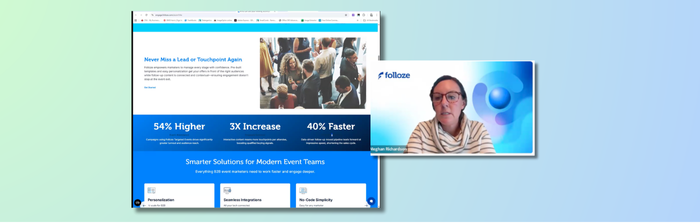
Meghan Richardson (during testing):
“This is the part that usually slows me down, just getting something on the page. Having a starting point that already makes sense changes everything.”
Melinda Monaco:
We’re intentionally not trying to get to 100% automatically. We’re trying to get marketers to a strong 70–80% faster, so their time goes into refinement, not setup.
For customer-facing teams, that 80% often meant ready to launch. For design-focused teams, it meant something else: a solid foundation they could shape, refine, and reuse.
Flor Estrada (during testing):
“For me, copy is usually the hardest part. Once that’s there, everything else moves faster.”
So what?
Speed isn’t about cutting corners. It’s about removing the work that keeps marketers stuck building instead of improving.
Automation Only Works When Marketers Stay in Control
Melinda Monaco:
One thing I appreciated was that people didn’t just accept the output. They questioned it. What came up?
Kristi Tutt:
A lot, actually, but in a good way. Cassie immediately asked where numbers and percentages were coming from. Someone else noticed duplicate sections. Others flagged tone issues or details they’d want to review before publishing.
That told us people weren’t treating this like a black box, they were treating it like a collaborator.
Cassie Ricci (during testing):
"It definitely helps speed things up, I just need to review and adjust. As a marketer, I have to be confident that everything is accurate before I ship anything."
Melinda Monaco:
And that’s exactly the posture we want. Folloze X is built so nothing goes live without human review. The agent accelerates the work, but marketers decide what’s right. Everything is editable. You stay in control of the final output.
Control showed up differently for the design-focused teams. It wasn’t just about accuracy, it was about experience.
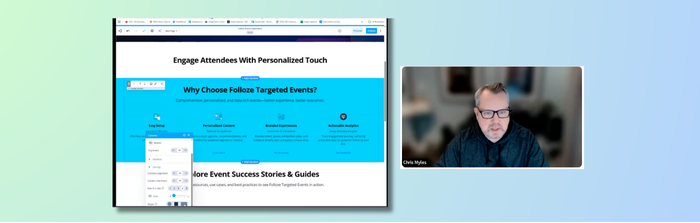
Chris Myles (during testing):
“I’m always thinking about hierarchy and CTAs. I don’t want five actions competing with each other.”
Milla Alves (during testing):
“Even if the content is right, the layout and accessibility still matter.”
So what?
Good marketers want leverage. This is what we mean by augmented marketing. AI doesn’t replace judgment or creativity, and that distinction matters, because marketers have all felt the frustration of AI tools that move fast but can’t be trusted. Augmented marketing works because it removes friction without removing control. AI accelerates execution and surfaces insight, while marketers stay accountable for what ships.
Campaigns Don’t Stop at Launch
Melinda Monaco:
Once campaigns were live, what shifted compared to the old workflow?
Kristi Tutt:
People weren’t talking about dashboards, they were talking about signals they could act on. What’s getting attention? Which audience version is resonating? What should change next?
Instead of babysitting campaigns, the focus moved to decision-making.
Candace (Taylor) DeAngelis (during testing):
“It feels less like monitoring and more like responding. I know where to focus.”
Melinda Monaco:
For design-focused teams, post-launch learning showed up differently, but it mattered just as much. Engagement patterns helped them understand which layouts and experiences were worth standardizing.
So what?
When creation, engagement, and insight live in the same workflow, learning actually turns into action.
Proving What Worked, Without the Postmortem
Melinda Monaco:
Let’s talk about proof. How did this change the ‘what worked?’ conversation?
Kristi Tutt:
It became immediate. Instead of pulling reports later, people were asking questions in the moment and getting usable answers.
That changes how you plan the next campaign, not just how you explain the last one.
Meghan Richardson (during testing):
“This makes it easier to know what to repeat next time. I’m not guessing.”
Melinda Monaco:
That clarity helps everyone—customer-facing teams and designers alike—decide what to reuse, refine, or drop.
So what?
Proof isn’t about reporting what already happened. It’s about giving marketers clear direction on what to do next.
Closing: Why This Matters for Marketers
What we saw during testing wasn’t magic. It was momentum.
Folloze X didn’t remove the need for strategy, judgment, or craft. It removed the work that gets in the way of those things.
This is augmented marketing in practice: marketers staying in control while AI handles the heavy lifting.
What this test reinforced:
- Marketers work differently and AI has to adapt to them, not the other way around
- Speed matters, but trust matters more
- Control is what enables marketers to move faster, not what slows them down
- Augmented marketing works when AI accelerates execution and humans stay accountable
While the long-term goal is autonomous marketing, that vision is achieved through a gradual process, not by bypassing necessary steps. The focus now should be on the immediate step: enabling marketers to accelerate their work, gain insights faster, and continuously improve their daily performance.
As Kristi put it afterward: “It didn’t replace how we think. It changed how fast we could act on it.”
Learn more about Folloze AI.