ABM in Action with FireEye: Scaling A Hyper-Personalized Account Strategy In Cybersecurity
Learn how Folloze customer, FireEye, has driven a 5x increase in engagement by scaling customized sales and marketing messaging.
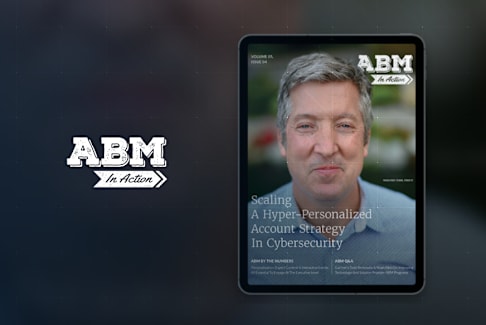
VOLUME 05, ISSUE 04
Scaling A Hyper-Personalized Account Strategy In Cybersecurity ABM BY THE NUMBERS Personalization, Expert Content & Interactive Events
All Essential To Engage At The Executive Level
ABM Q&A Gartner’s Todd Berkowitz & Noah Elkin On Improving
Technology And Solution Provider ABM Programs
MARLOWE FENNE, FIREEYE
EDITOR’S LETTER
By Klaudia Tirico
ABM IN ACTION
Scaling A Hyper-Personalized
Account Strategy In
Cybersecurity
By Andrew Gaffney
5
6
ABM BY THE NUMBERS
Personalization, Expert
Content & Interactive Events
All Essential To Engage At The
Executive Level
By Michael Rodriguez
ABM Q&A
Gartner’s Todd Berkowitz
& Noah Elkin On Improving
Technology And Solution
Provider ABM Programs
By Michael Rodriguez
12
18
03ABM IN ACTION02 ABM IN ACTION
Greetings, marketers!
Another issue of ABM In Action is here and I am still — like many others, I’m sure — writing this letter from my home office. I hope everyone is hanging in there and perhaps already used to (and thriving in!) our
new reality by now.
ABM continues to be a key ingredient for success for many B2B organizations. Our sister publication
Demand Gen Report is about to drop its latest ABM benchmark study as this issue goes to press and the numbers simply don’t lie. Here’s an early look:
f 98% of respondents are using or plan to use ABM strategies, with 57% using a combination of demand generation tactics and ABM processes to streamline their marketing efforts;
f 74% who haven’t used ABM yet are planning to add an ABM strategy within the next six months to a year; and
f 73% of respondents said ABM has greatly exceeded their organization’s expectations.
This quarter’s issue is small but mighty! My team and I are constantly impressed with Marlowe Fenne’s
work and we’re so excited to share his story with our audience. Fenne has been an early pioneer of
account-based sales and marketing plays, with massive success in his previous role at Cisco and now
FireEye. In just nine months, Fenne’s ABM initiative has generated $8 million in pipeline — and we’ve got
the details on how he did it. Plus, you’ll also gain insights into:
f Brand-new research from ITSMA on how B2B executives engage. We spoke with the company’s SVP Rob Leavitt, who shared insights into executive account priorities, personalized outreach and
content consumption and creation, that are sure to help you improve account engagement at the
executive-level.
f The complexities of ABM for technology and service providers. Check out the Q&A with Gartner analysts Todd Berkowitz and Noah Elkin.
I hope you enjoy diving into these real-world stories and expert insights and gain the inspiration you need
to reach your target audiences. As always, my team and I look forward to your feedback. Share your
thoughts on Twitter by tagging us on @ABM_In_Action or reach out to me directly!
Stay safe, well and sane!
Sincerely,
Klaudia Tirico
Editor
ABM In Action @klaudiatirico 05ABM IN ACTION
EDITOR’S LETTER
https://twitter.com/klaudiatirico
Operating in the fast-growing but also highly
competitive cybersecurity space, FireEye made the decision to ramp up an account-based
marketing program in February of 2019.
Rather than taking small steps to pilot its account-
based program, FireEye went with an aggressive
approach to recruit a highly regarded ABM
practitioner and immediately invested in tools
and tactics that would help rapidly scale across
geographies and various go-to-market motions.
A key component of its ABM rollout was the
hiring of Marlowe Fenne, considered one of the
early pioneers of building personalized account-
based sales and marketing programs. Prior to
joining FireEye, Fenne spent a decade at Cisco
architecting campaigns that would eventually
support more than 5,000 account managers and
engage approximately 20,000 customers.
The success of the Cisco programs became
widely regarded as a blueprint for success in
ABM, not only because they drove 20% pipeline
for participating sales teams, but also because
they featured “personalized” touches that
could be easily scaled and pre-populated at the
account executive level.
Scaling A Hyper- Personalized Account Strategy In Cybersecurity
ABM IN ACTION
06 ABM IN ACTION
Since joining FireEye in January 2019, Fenne has
built on the success of that model, adding in such
new elements as:
f Deep research and intelligence gathering on all priority accounts at the outset to
ensure contextual and relevant messaging;
f Investments in bespoke content tailored to the specific business initiatives of
individual accounts; and
f A scalable model that enables variations of adoption for high-touch, true 1:1 accounts,
as well as one-to-few or one-to-many.
The approach has drawn the attention and
respect of some of the top analysts in the
ABM category. For example, Rob Leavitt,
Senior VP of Consulting at ITSMA, has called
out elements of FireEye’s ABM program for its
executive-level focus.
“Marlowe is a real leader in the ABM space and
I’d highlight three lessons in particular about
the FireEye program: Deep collaboration with
account managers on customized plans and
engagement for each ABM account; deep insight
on the executives within each account to enable
personalized C-suite connections; and deep
commitment to providing thought leadership and
value with every connection,” Leavitt said.
In addition to recognition from industry analysts,
the FireEye program has also generated
impressive early returns in terms of pipeline
impact. Only nine months after the launch, the
ABM initiative has already been credited with
generating $8 million in pipeline and improving
engagement with key accounts by 5X.
ABM in Action recently sat down with Fenne to get a behind-the-scenes look at the tools and
tactics FireEye is using to combine a data-driven
approach to personalization with deep research
on accounts to tie conversations and messaging
back to business challenges.
07ABM IN ACTION FENNE, FIREEYE
“Approximately 40% of the engagements we are driving from an ABM perspective are with VP or C-level executives.”
MARLOWE FENNE, FIREEYE
HOW FIREEYE HAS DRIVEN A 5X INCREASE IN ENGAGEMENT BY SCALING CUSTOMIZED SALES & MARKETING MESSAGING
https://www.fireeye.com/
FireEye started with a true 1:1 ABM approach
and built from a base of only three accounts in
February 2019, which expanded to nine, and
then quickly grew to more than 100 based on the
early success.
While the initial accounts were selected by the
sales team based on their size and scope, Fenne
said FireEye has now expanded to use intelligence
from platforms like 6sense and Bombora to
identify additional target accounts based on fit,
intent, relevancy and engagement scores.
Because FireEye’s programs were targeting
C-level executives at some of the largest
companies in the world, Fenne and the FireEye
team committed early on to a disciplined approach
to building highly customized campaigns, content
and sales messaging. From the outset, FireEye
has taken a laser focus to content and offers that
included unique “careabouts” or business issues
that would be highly relevant to the specific
companies and executives.
Fenne explained that FireEye gathers “qualitative
and quantitative inputs” for all of its key
accounts. The research enables the marketing
and sales team to map a strategy and develop
messaging that aligns with a target account’s key
business initiatives.
To help with this account-level research, FireEye
has utilized a solution called PipelineIQ to build “profiles” for each target account, which includes
information on key stakeholders, news about
the company and suggestions on conversation
starters with insights into their top business and
technology initiatives. Fenne added that this
level of intelligence gathering is critical to driving
value-based conversations with the executive-
level buyer they engage with.
“Approximately 40% of the engagements we
are driving from an ABM perspective are with
VP or C-level executives,” Fenne said. “And
that’s across accounts that are typically Fortune
500 companies. So, our goal is to create highly
personalized experiences — from ads to events
to landing pages — which demonstrate our
understanding not only of the security space, but
also to deliver very specific value to each account.”
08 ABM IN ACTION
In addition to providing their internal account
managers with profiles on each account,
FireEye’s marketing team uses intelligence to
create customized “Solution Briefs,” which are
templated content assets that are shared directly
with key executives.
Fenne added that FireEye invests in building
highly relevant client portals and delivering
valuable content for all key accounts. “Once
we understand the business initiatives for
our customers, we understand where their
risks are from a security perspective,” he
said. “This helps us deliver very specific value
for them, that ultimately makes it easier for
them to understand how to better secure the
organization and take the next steps to be one
step ahead of the bad guys.”
09ABM IN ACTION
DEEP DIVES INTO THE “CAREABOUTS” FOR ALL KEY ACCOUNTS
For many organizations, cloud security has not kept up with the rapid pace of cloud migration. It’s not that the cloud is more susceptible to attack, but the cloud is where data is headed, and the bad guys follow the data. FireEye has detected a massive uptick in cloud- related incidents, with 20 percent of investigations currently being worked involving the cloud.
The challenge in a dynamic and ethereal cloud environment is to understand who is doing what and whether they are supposed to be doing it. Mitigating cloud security risks requires greater visibility, centralized monitoring, and tight control of credential abuse. This can strain resources precisely at a time when all companies are facing a dramatic shortage of trained security professionals.
As TD Bank scales its cloud solutions, including leveraging Microsoft Azure for over 26 million customers and Office 365 for 85,000 employees worldwide, effective cyber security becomes imperative. FireEye works closely with Microsoft, Amazon, Oracle, F5, and other leading cloud companies
to improve industry-wide cyber security. Our security expertise can help TD Bank make cloud intelligence more actionable, and accelerate cyber security incident detection and response. Quite simply, we know more about advanced attackers than anyone. Learn more.
Be Prepared A FireEye incident response retainer puts FireEye Mandiant consultants on speed dial. When the inevitable happens, and it will, you can reduce your incident response time and minimize breach impact. You can also consider how your cyber insurance policy reimburses for incident response (IR) expenses and ask your insurer about lower premiums if you can show a proactive approach to cyber security. Learn more.
A successful partnership FireEye Mandiant consultants have already successfully teamed-up with TD Bank staff to enhance their overall incident response program. Working at multiple levels of the TD Bank security operations center (SOC), Mandiant experts developed a common taxonomy classification and enhanced TD Bank’s SOC operating model.
Focusing on TD Bank’s crown jewels, Mandiant experts also developed playbooks and use cases to enhance monitoring capabilities. They also successfully updated and enhanced TD Bank’s overall cyber crisis management processes.
FireEye continues to enable TD Bank
to evaluate its cyber security posture and get expert recommendations and solutions to help improve capabilities, prioritize responses to mitigate risk and protect assets across the enterprise.
Learn more about cyber security solutions from FireEye and its Mandiant services. Schedule time with Rick Stewart, rick.stewart@ fireeye.com or Oomesh Patel, oomesh.patel@mandiant.com, your Account Executives dedicated to TD Bank.
For more information, visit www.FireEye.com
Improving Cloud Visibility
Solution brief
For
Managing TD Bank’s Security Investments
What if you could quantify the effectiveness of your security measures before fully deploying your next wave of innovations? With Verodin®, now part of FireEye, that’s exactly what you can do.
Verodin can help TD Bank better understand cyber readiness by:
• Identifying gaps and overlaps • Optimizing resources • Determining the value of your tools
and controls.
Verodin gives you the metrics to quantify and measure security preparedness across prevention, detection, and response, just like any other data-driven part of your business. Verodin will help reduce your security spend by identifying where you can retire old and unnecessary security solutions. With Verodin metrics, CISOs can better manage cyber investments and help peers and board members align around top cyber security initiatives. Learn more.
26 million Microsoft Azure and Office 365 clouds will serve over 26 million TD Bank customers and 85,000TD Bank employees worldwide
FIREEYE & TD BANK ASSETS
https://pipelineiq.com/
BOMBORA
6SENSE
PIPELINEIQ
FOLLOZE
MARKETO
SALESFORCE.COM
ABM TECH STACK The positive returns from FireEye’s ABM
programs have come from a variety of
directions. After generating more than
$8 million in pipeline in its first three
quarters, the ABM initiative has continued
to post impressive results even amid the
pandemic. As of early October, Fenne
reported that the ABM program was
already at 150% of its goal for the year, in
terms of pipeline and bookings.
Furthermore, the investment in creating
high-value experiences for executives is
also paying off, as Fenne reported that
65% of the team’s engagements are now
with VP or C-level execs, which is a 25X
increase over the year prior.
As the company looks to build on its
success, Fenne said another element
of the program’s success is to use the
Folloze platform to market their marketing
internally. “We market to our own execs
as well, and then we also get them
involved in peer-to-peer engagements
with executives at target accounts. Using
the platform to deliver this and track the
engagement is also really valuable.”
EXPANDING WITH AN EYE TOWARDS SCALABILITY
FUELING SALES ENGAGEMENT WITH CUSTOMIZED EXPERIENCES
11ABM IN ACTION
Since the marketing team supporting the ABM
rollout is limited to only three people, Fenne
understood from the outset that it would
be critical to use technology to scale the
program across their 50+ account managers
on a global basis.
One of the platforms Fenne highlighted as
critical to this expansion for FireEye is Folloze.
The platform enables marketing to build hyper-
personalized experiences for key accounts on
behalf of sellers, which can be built without code
and can include email, ads and website elements
drawing from data inside the company’s CRM and
MAP systems. Fenne pointed out that Folloze
also provides real-time visibility into the types of
offers that are resonating with other executive
buyers. It also gathers engagement analytics
on the audience’s interests and actions and can
integrate that data back to the CRM or MAP.
In addition to the ability to easily customize
experiences for key accounts, Fenne said an
equally important payoff has been its ability to
rapidly scale ABM across the sales organization
and fuel a hybrid model for ABM. “You really get
the best of both worlds with Folloze, because you
can personalize the experience for accounts, but
you can also add accounts very quickly. We can
now deliver ABM experiences at different levels
of personalization. So, for our top accounts, it
includes hyper-personalization, but at the mid-
tier it might just include customized emails, ads
and a portal. Then at the one-to-many level,
account managers can really self-service and
create account portals and rep-specific emails.”
The ability to personalize experiences for
accounts has paid off for FireEye, as Fenne said
email results have improved by 5-10X since
the company deployed the Folloze platform. In
addition, email open rates have typically climbed
to around 15%.
Andrew Gaffney, ABM In Action @agaffney
“We can now deliver ABM experiences at different levels of personalization. So, for our top accounts, it includes hyper personalization, but at the mid-tier it might just include customized emails, ads and a portal.”
MARLOWE FENNE, FIREEYE
10 ABM IN ACTION
https://twitter.com/agaffney
Amid the pandemic, marketers need to
understand how business and IT executives
within their target accounts have shifted
strategy, priorities and purchase behavior if they
want to engage and sell at that level.
New research from ITSMA, a B2B and ABM research and advisory firm, highlights how the
success of ABM plays at the executive level
hinges on the ability to engage executives with
truly personalized, timely, relevant and useful
connections.
The good news, according to the company’s
2020 How Executives Engage Survey, is that executives are looking for consultative help as
they continue to transform their companies for
the digital age while adapting to the pandemic.
Responding effectively to this opportunity,
however, requires high-touch campaigns,
personalized and informed content, and a focus
on interactive and collaborative events.
This presents a new challenge for marketers,
as they have to keep up with the fast-changing
needs and priorities of the executives they are
trying to reach.
Rob Leavitt, SVP of ITSMA, offered some
additional insights into executive priorities,
personalized outreach and content consumption
and creation, all important for marketers looking
to improve their account engagement at the
executive level.
Personalization, Expert Content & Interactive Events All Essential To Engage At The Executive Level
ABM BY THE NUMBERS
Executive priorities vary by company and
individual, as many have different visions for
how their companies need to adapt, operate
and grow. Leavitt explained that marketers must
understand what executives are working on
within their companies to better target them.
According to the ITSMA survey, for example, 47% of companies are relatively advanced in their digital transformation and they’re investing strategically to continue the process. Another 40% are at an earlier stage, focused on preparing their companies to adapt to the digital age.
“At the same time, many of the executives that
marketers are trying to reach have shifted
dramatically over the last few months from
what they were doing before to a new set of
priorities,” Leavitt explained. “Looking ahead,
they’ll mostly be interested only in vendors and
solution providers that can help them chart this
new course.”
When considering an executive’s expectations, a
marketer must also understand their role in their
company’s decision-making process, and how the
decision-making process itself has changed since
the pandemic. The ITSMA survey cites great
variance in recent changes. For example, 21% of companies have increased the number of people involved in the buying committee and 27% said they are spending more time before a decision is reached. These executives and companies are clearly being more cautious when
making purchase decisions.
But other companies are streamlining the buying
process, considering fewer vendors and moving
more quickly to decisions.
“You need to know, as a marketer, how the
accounts you are marketing to have changed with
their decision-making process,” Leavitt stated.
“We’ve always had to focus on ‘who are you
trying to reach?’ and ‘how can you reach them?’
It’s critical now to also look at, ‘what decisions are
they making and how are they making them?’”
BEING AWARE OF EXECUTIVE EXPECTATIONS
“Buyers at the executive level are going to respond better to a personal email from your CTO, or your CMO, than they are to a mass email. Writing a personal note to the CMO is going to be way more effective than a marketing team blasting out a personalized broadcast.”
ROB LEAVITT, ITSMALEAVITT12 ABM IN ACTION
https://www.itsma.com/ https://www.itsma.com/research/how-executives-engage-understanding-changing-buyer-behavior-in-response-to-the-covid-19-pandemic/
14 ABM IN ACTION
PERSONALIZING MULTICHANNEL STRATEGIES FOR EXECUTIVE ENGAGEMENT According to Leavitt, executives are expecting
marketers to engage them in a personalized way.
But with the sudden shift to digital-only, B2B
organizations have to think differently about
how best to give executives the personalized
engagement they are looking for. Before
the pandemic, face-to-face was typically the
most effective and preferred approach, with
executive meetings, briefings, small events and
peer networking.
“Buyers at the executive level still prefer more
intimate, small-scale, personalized types of
connection,” Leavitt stated. “They’re going to
respond better to a personal email from your
CTO, or your CMO, than they are to a mass
email. Writing a personal note to the CMO is
going to be way more effective than a marketing
team blasting out a personalized broadcast.”
The research showed that personal video calls,
email and phone calls are the most preferred
ways to engage for executives today, while less
personal approaches such as podcasts, direct
mail and social media are the least preferred.
Most important, though, is having a creative,
multichannel strategy.
“We need to be much more creative about
different kinds of virtual interaction,” said
Leavitt. “We need to give the people we’re
trying to reach a multiplicity of options for how
they connect with us. Different executives have
different personal preferences. Social media may
be low on the list but can still be effective for
building reputation and individual connections,
especially if it’s personal and focused on the
executives that you know are already active on
social. So, in addition to a LinkedIn ad campaign,
for example, make sure your salespeople and
your own executives also reach out personally
on LinkedIn.”
CONTENT & CONVERSATION FOR EXECUTIVE CONNECTION Executives are constantly searching for content
that provides solutions to their needs and pain
points. But content is typically only a door
opener. The real engagement comes through
interactive events and meetings with peers and
other experts. Interactive events focused on
innovation are an especially effective way to
reach target executive accounts; they allow the
executive to build on new ideas in content with
conversation and brainstorming to go deeper
with problem solving.
According to the survey, content consumption during the pandemic has actually increased a bit from an average of 3.8 hours of reading to 4.1 hours, suggesting that executives are taking more time to research. But there has been a shift in focus, from longer term visionary
content to nearer-term practical content.
As Leavitt notes, “many executives today have
had to put off long-term strategy in favor of
making sure they manage the immediate shifts in
direction and still hit their numbers, or minimize
the negative impacts of the current disruption.”
Marketers are also turning more to technology
providers and third-party vendors than they
did before the pandemic, vs. other information
sources such as analysts and consulting firms.
The study showed that 35% of executives cited technology providers and professional services as their most trusted sources for content information, and 33% turned to industry professionals in social networks to consult with. Leavitt explained that the shift to near-term priorities correlates to greater
interest in solutions that can be implemented
here and now vs. the broader frameworks and
commentary that analysts and other third-party
experts often provide.
Interestingly, executives overall show little
preference for different types of content
formats. Quality and relevance are much
more important, and there is little evidence
that executives “have no time for long papers
or videos,” as some have suggested. In fact,
executives are just as interested in long-form
content as shorter, bite-sized pieces.
Most important, though, is the acknowledgement
that bringing executives together for virtual
conversation and collaboration is ultimately
the most effective format for engagement.
Interactive programs are best suited to foster
“collaborative innovation,” allowing executives
to share their needs, knowledge and ideas
with peers, working together to identify new
approaches and solutions.
15ABM IN ACTION
SINCE THE PANDEMIC, WHICH SOURCES OF INFORMATION DO YOU TRUST THE MOST?
Technology providers (e.g., Adobe, SAP, Cisco, Fujitsu)
Professional services/systems integrators (e.g., Capgemini, Accenture, TCS, Cognizant, IBM)
Industry/professional online communities/social networks
Academic institutions (e.g., Harvard, Wharton, London School of Economics, MIT Sloan School)
Management consultants (e.g., McKinsey, Bain, Boston Consulting Group, boutique firms)
Industry analysts (e.g., Forrester, Gartner, IDC)
Media outlets (e.g., Wired, Fast Company, Forbes)
35%
35%
33%
25%
25%
25%
18%
The collaborative approach is critical, said Leavitt. “The executives we’re trying to reach are the experts
on their own business, and they know way more about their business than we do. But we have a
broader view. If we can bring that insight, experience and learning together as a vendor or a solution
provider, we may find a lot of the questions that [executives] should be asking, even if we don’t have all
the answers for them.”
Yet again, however, you can’t assume one size fits all.
“Executives have different motivations for participating in events or programs with us,” Leavitt said.
“We need to understand when we’re inviting people, what their motivations are and how we respond.
How are we serving them?”
Engaging accounts at the executive level presents its own challenges, but marketers are slowly
adapting their ABM strategies to create thriving relationships with executives. By focusing on
personalized engagement, executive goals and specialized content, marketers can target those
accounts more effectively.
For additional insights into executive account trends, check out the full ITSMA Survey report.
Michael Rodriguez, ABM In Action @Michael27575782
16 ABM IN ACTION
AT THIS POINT IN TIME, HOW DO YOU PREFER TO ENGAGE WITH SOLUTION PROVIDERS (INCLUDING BOTH TECHNOLOGY PROVIDERS AND PROFESSIONAL SERVICES FIRMS/ SYSTEMS INTEGRATORS)?
LEAST PREFERRED NEUTRAL MOST PREFERRED
Video call (Zoom, Webex, Skype, Google Hangout, etc.)
Email Phone conversation/
conference call
Online event
Solution provider’s website
Solution provider’s
online community
Video Podcast Physical mail, package, or
meal delivery
Social Media
39%42% 359% 30% 28% 24% 21% 21% 18% 16%
9%11% 14% 14% 14% 20% 15% 27% 25% 37%
52%46% 52% 56% 59%
56% 64% 52% 57%
48%
CREATIVE FUEL For New Revenue Realities
50+ SESSIONS Across three days! All of which can be viewed live during the show days or on-demand immediately after they air!
CONNECT WITH EXPERTS Through any of the programs we have including B2B Mentors, #B2BSMXperts, Workshops & Intimate Roundtables.
SIX CONTENT TRACKS Targeted sessions for marketing and sales teams on channel marketing, demand gen, revenue ops, ABM and more!
OCTOBER 26-28
https://www.itsma.com/research/how-executives-engage-understanding-changing-buyer-behavior-in-response-to-the-covid-19-pandemic/ https://twitter.com/michael27575782
As more technology and service providers
(TSPs) attempt to leverage ABM
programs, they find themselves making
many mistakes that lead to ultimately
disappointing results. ABM programs are
more complex than TSPs and their leaders
realize, and haphazardly rushing to launch
these programs has led to confusion and
disagreements within those organizations.
We spoke with Gartner’s Todd Berkowitz, Practice VP of Tech Product Marketing,
and Noah Elkin, VP Analyst, to gain some
insights into how TSPs can leverage
effective ABM programs while avoiding
their previous years’ pitfalls.
Gartner’s Todd Berkowitz & Noah Elkin On Improving Technology And Solution Provider ABM Programs
ABM Q&A
18 ABM IN ACTION
ABM IN ACTION: What are some challenges facing Technology and Service Providers looking to move towards an ABM program?
Todd Berkowitz: There are quite a few challenges. While on the surface, ABM looks like
just a more-focused demand generation program
that is targeted at defined set of accounts. When
done right, it’s more of a new go-to-market
model. You are going after the buying team
on the account rather than just an individual,
and you are making a bet that putting focus/
resources/time/money on reaching the buying
team for some set of accounts will ultimately pay
off in higher conversion rates, bigger pipelines,
shorter sales cycles, etc.
This whole approach is new for a lot of tech
companies. They don’t always have experience in
selecting accounts beyond whether they fit into
an ICP. They aren’t used to thinking about how to
engage the audience throughout the entirety of
the buying cycle, rather than just to the point of
an MQL. The ways they measure effectiveness,
especially account-level engagement, aren’t
common to them, nor easy to do inside of a
marketing automation or SFA system. Sales
may be used to only engaging at the point of
an MQL rather than engaging at the beginning
(continuous and synchronized outreach across
sales and marketing channels is a hallmark of a
good ABM program). The relationship between
19ABM IN ACTION
BERKOWITZ, GARTNER ELKIN, GARTNER
https://www.gartner.com/en
sales and marketing may be problematic. There
may not be enough resources to run a program
at scale. The list of challenges goes on and on.
ABMIA: How can these organizations better plan the launch of an ABM program without biting off more than they can chew?
Berkowitz: If you are new to ABM, the best advice is to start narrow and small. By narrow I
mean pick a single use case and then further limit
the number of plays. You ideally want to build an
audience of accounts that looks like each other.
That also means getting accounts at the same
point in the buying cycle. Accounts that are pure
top-of-the-funnel differ from those that are
showing first-party web engagement or third-
party intent, which are different from those that
attended a webinar or some sort of event, which
are different than a pursuit play.
Then you think about what you are selling. If
you have three products, the play should be
around a given product, “Like top-of-the-funnel
for product A” or “Selling product C to those
clients that have product B.” It’s honestly easier
to target 50 companies that look like each
other than target five accounts that have totally
different use cases and plays. You may also want
to start with a segment of sales reps.
Noah Elkin: Limit the initial number of accounts you include in your ABM program. Do this by
starting off with a pilot program that you can
use to optimize fit, engagement plans, internal
processes and messaging to key decision makers
within the buying committee. If you plan to target
large, complex accounts or experiment with
different kinds of account-level personalization,
these activities are far easier to manage on a
smaller scale.
20 ABM IN ACTION
ABMIA: What tips/best practices can you offer an organization that is looking to do a blend of traditional demand gen and ABM?
Berkowitz: There are few, if any TSPs, that are all ABM, all the time. You will likely run
both approaches simultaneously. Then you
need to think about prioritization, especially
with the SDRs/BDRs. Maybe priority #1 will
be responding to inbound leads from “Contact
Us” or demo requests, but they need to work
through the ABM accounts on the outbound side
before going to the broader list.
Then there is also budget, especially for
advertising. You may have to pull from some of
the AdWords (which is broader-based) budget to
pay for say LinkedIn Ads for the ABM account,
unless you see the program as being additive on
the cost side. ABM is going to be more resource-
intensive, especially at first. Don’t assume there
is no opportunity cost to doing it.
Elkin: Look to leverage the marketing-sales alignment you develop for your ABM program
and the insights you uncover about buyer
personas across your demand gen efforts.
Be sure to come up with some internal
orchestration and engagement protocols so
that individual leads that may be part of a target
account are not subject to overcommunication
or inconsistent messaging.
ABMIA: Why do you suggest reducing reliance on MQLs as a primary marketing goal?
Berkowitz: We’ve long believed that MQLs should only be one of many things to use to
measure marketing success. More and more tech
marketers are being measured on contribution
to revenue than MQLs anyway. But the question
has important context in the case of ABM. If you
are shifting existing marketing spend/resources
from traditional demand gen to ABM, you are
likely to see fewer MQLs. The narrower targeting
will lead to fewer MQLs, but you hope to make it
up down the funnel.
Elkin: Adding to Todd’s point, ABM is ultimately about emphasizing the quality of leads over
quantity, and coming up with prioritization
mechanisms that may naturally limit the volume
of MQLs. What’s more, ABM measurement
entails a shift from measuring lead volume to an
emphasis on the quality and level of engagement
of buyers within target accounts.
21ABM IN ACTION
“If you are new to ABM, the best advice is to start narrow and small. By narrow I mean pick a single use case and then further limit the number of plays.”
TODD BERKOWITZ, GARTNER
22 ABM IN ACTION
ABMIA: What can marketers do better to enhance their ABM strategies?
Berkowitz: Educate themselves on what ABM means. Get clear alignment with sales and the
executive team about what ABM means and what
they are trying to accomplish. Don’t rush into a
program without starting with a pilot. Recognize
there will be a learning curve and opportunity
cost. Focus on getting the right accounts selected
and prioritized and not just using sales’ wish list.
Leverage help and advice from others (agencies,
analyst firms, consultants, peers).
Elkin: Emphasize the people, process and workflow components of ABM before
throwing (more) technology at the challenge
or opportunity. At its core, think of successful
ABM as a function of effective segmentation
and personalization, including coordinated
engagement and nurturing of selected accounts.
ABMIA: What are some tactics marketers can use to achieve executive buy-in for an ABM program?
Berkowitz: This is why the pilots are key. If you start small and prove the value from the pilot,
it’s easier to get the money, resources and tech
to scale it later. But if that initial buy-in is the
issue, there is an awful lot of data showing the
effectiveness of ABM programs. Present that as
part of the business case.
Elkin: Emphasize the resource maximization benefits of ABM – rather than dispersing
marketing and sales resources and efforts by
treating all leads equally, ABM enforces a focus
on the best-fit opportunities. The need to
more closely align marketing and sales to make
ABM work effectively can yield broader
positive impacts in the overall marketing and
sales process.
Michael Rodriguez, ABM In Action @Michael27575782
P.S. You can be one of the lucky 150 attendees to win free lunch! Compliments of our friends at Grubhub.
Addressing New Realities & Strategies To
Engage Audiences In 2021 Register for #SPS20 to explore dynamic shifts in B2B
buyer behaviors and perceptions, focusing on the trends, tactics and tools that have driven success.
REGISTER NOW FOR FREE
NOVEMBER 16-20
https://twitter.com/michael27575782
WHAT’S WORKING IN VIRTUAL EVENTS?
GET THE REPORT